
2025 LIFETIME ACHIEVER AWARDS
 |
 |
 |
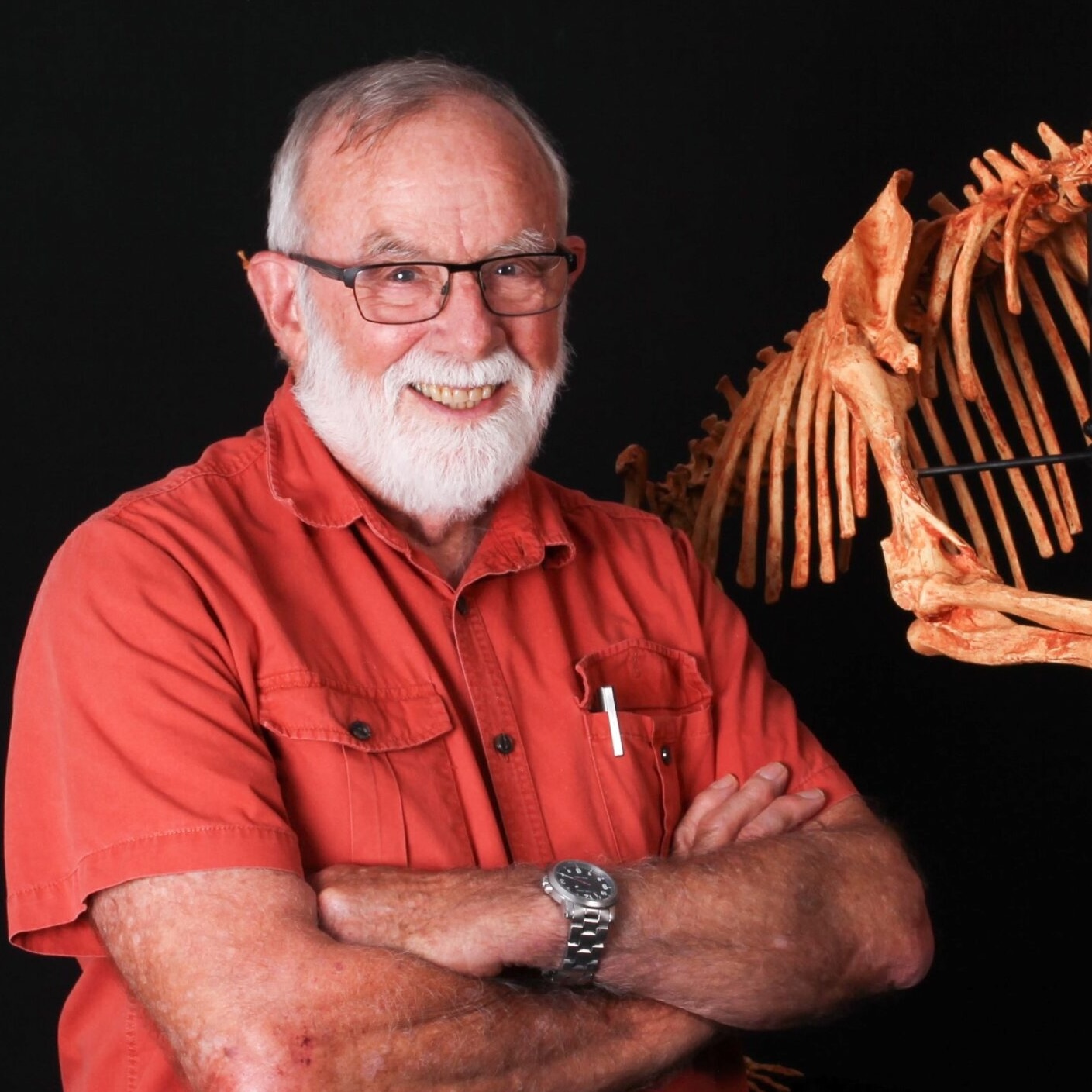
Professor Emeritus Rod Wells AM |
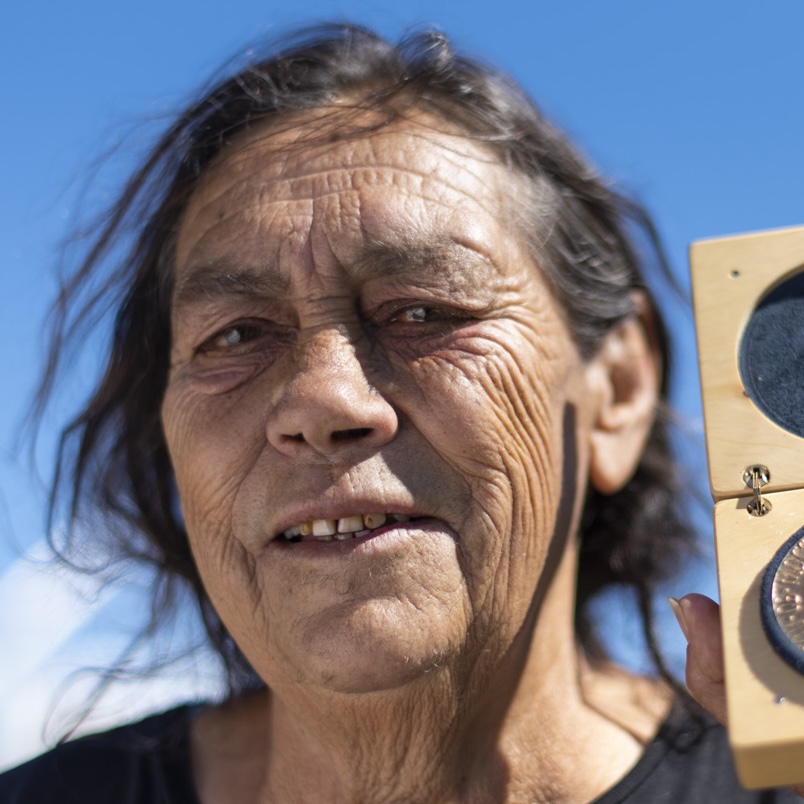
Sue Coleman-Haseldine |
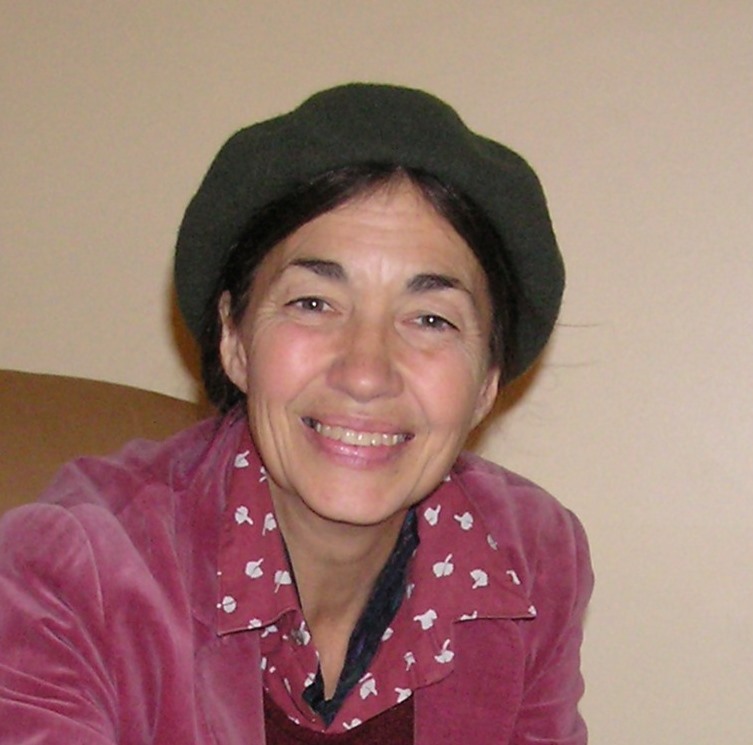
Joan Gibbs
|
|
|
|
|
Professor Emeritus Rod Wells AM
Professor Emeritus Rod Wells AM is widely regarded as the founding father of palaeontology at Flinders University, but his journey to that title is anything but conventional. Driven by an insatiable curiosity and a passion for exploration, Rod left a career in engineering to follow his dream of studying the natural world, graduating with first class honours in zoology before dedicating his life to uncovering Australia's deep fossil history.
His discoveries have been nothing short of remarkable. In 1969, Rod unearthed one of Australia's most significant palaeontological finds — an immense deposit of extinct ice-age mammals in Victoria Cave at Naracoorte — a site he helped lead to World Heritage listing in 1994. He also pioneered research into the Southern Hairy-nosed Wombat and established what is today Australia's premier palaeontological research laboratory at Flinders University.
Now in honorary retirement, Rod continues to contribute to fossil research across South Australia. His legacy lives on not only in the discoveries he has made, but in the generations of scientists he has inspired. Tonight, we are proud to honour a man who proves that when you follow your dream — and ignore the naysayers — the rewards can be extraordinary.
Sue Coleman-Haseldine
Aunty Sue Coleman-Haseldine is a Senior Googatha elder based in Ceduna, far-west SA. She has a long legacy of caring and fighting for her Country.
She is the president of the Australian Nuclear Free Alliance, and has accepted the 2017 Nobel Peace Prize on behalf of ICAN - the International Campaign to Abolish Nuclear Weapons.
Aunty Sue is a nuclear test survivor. She was a child at Koonibba Mission when the British set off their nuclear bomb tests at Maralinga and Emu Fields, and she and her people are still feeling the impacts of these devastating weapons.
For decades, Aunty Sue and her family have continued their culture and responsibility in caring for Country, shared knowledge, and advocated for the protection of Googatha Country. Twice annually, she takes family and friends on rockhole cleaning trips, to visit sacred sites, maintain and clean the rockholes. These culturally significant sites are being endangered by rocket launches and landings on the so-called "Koonibba Test Range", conducted for military and commercial purposes. The rocket range is a militarized zone that exists right over the top of the special bush Aunty Sue's people have been caring for and living with across millennia.
Aunty Sue is calling on us all to protect Googatha Country and stand against militarisation and continuing colonisation. We are proud to honour Aunty Sue
Joan Gibbs (awarded posthumously)
Joan Gibbs spent 36 years shaping the next generation of environmental scientists at the University of South Australia, where she taught restoration ecology with a passion that her students didn't just observe — they felt it. With her distinctive, gentle North American accent and her unmistakable sense of purpose, Joan was the kind of educator who made you believe that this work truly mattered. For her, it was never just a job. It was a calling.
Joan went above and beyond for her students in ways that left lasting marks on their lives and careers. She championed women in science at a time when universities were far less welcoming to them, and she opened doors for countless young environmentalists — helping them secure their first field placements, their first taste of real conservation work, and the confidence to keep going. She was, by all accounts, a fierce advocate, a gentle soul, and a slightly eccentric, enormously magnetic force for good. Joan understood what many overlooked: that 97 per cent of biodiversity lives in the top ten centimetres of soil, and that true ecological recovery had to start from the ground up. Her approach — using native grass seeds, biochar and community volunteers — was as innovative as it was practical, reducing bushfire fuel loads and rebuilding ecosystems from scratch.
Joan also had profound respect for indigenous knowledge. She worked with Aboriginal Elders and communities on restoration projects from Ceduna to the Flinders Ranges, Yorke Peninsula, Adelaide and the Coorong.
Sadly, Joan passed away in January 2026. The restored landscapes, the careers she quietly shaped, and the students whose lives she changed are her lasting gift to South Australia. We are proud to posthumously recognise Joan Gibbs as a Lifetime Achiever.
JILL HUDSON AWARD FOR ENVIRONMENTAL PROTECTION
Winner: Dr Faith Coleman
Faith Coleman was quite literally born with her feet in saline muds, growing up exploring tidal deltas alongside a family of environmentalists and primary producers, and today she is one of the nation's most respected estuarine ecologists — and the youngest person ever accepted as a full Fellow of the Royal Society of South Australia. Over the past 18 months, she has devoted extraordinary personal time and expertise to South Australia's harmful algal bloom crisis, becoming a trusted voice for fishers, conservation groups, traditional owners, and farmers alike, translating complex science into clear, accessible language for communities across the state. Her commitment to transparency ultimately led her to resign from government panels citing political interference — and to nominate as an Independent candidate for the SA Legislative Council.
Finalists:
Associate Professor Jochen Kaempf
When South Australia's harmful algal bloom was still emerging, Associate Professor Jochen Kaempf — a physical oceanographer with deep expertise in coastal ocean dynamics — conducted independent, unfunded modelling that provided one of the earliest and most important public warnings about the scale and longevity of what was coming. That work helped lay the groundwork for the government's eventual management response, including the Algal Bloom Summer Plan, even if that contribution has largely gone unacknowledged. His willingness to step outside the academy and engage directly with the public is a reminder that great science is most powerful when it is shared.
Triton Tunis-Mitchell
Triton has spent over a decade building community care and using it as a force for environmental good — running Human Kind, a B Corp yoga studio offering free memberships for First Nations people, directing tens of thousands of dollars in seed funding to local environmental initiatives each year, and playing a key role in The Circular Initiative in Myponga, regenerating 264 acres on Kaurna land. He has partnered with the Bob Brown Foundation and Conservation SA to mobilise public action around voting for nature, joined frontline environmental actions himself, and in 2026 raised $23,700 for environmental charities through his studio fundraiser alone. Triton is proof that community leadership, when rooted in genuine care, can ripple outward in remarkable ways.
GREEN ADELAIDE'S PELZER PRIZE
Winner: Dr Jake Robinson
Jake has dedicated his career to making the invisible foundations of life — the microbial communities beneath our feet — visible, relevant, and loved by everyday South Australians, through his books Invisible Friends, Treewilding and The Nature of Pandemics, his Nature. Gut. Brain. digital platform with over 180,000 YouTube views, and countless public lectures, school workshops, and community presentations across Adelaide that reframe soils, parklands, and urban green spaces as living systems essential to both environmental resilience and human health. Grounded in rigorous scientific research in microbial and restoration ecology, Jake's work bridges a critical gap between science and community — building the kind of ecological literacy that turns residents into stewards, and stewards into advocates.
Certificates of Merit:
Professor Wayne Meyer - Certificate of Merit for Urban Wetlands
Mark Richards - Certificate of Merit for Regional Communities
David Howlett - A Certificate of Merit for Urban Biodiversity
Max McQuillan - Certificate of Merit for Urban Grasslands
CONSERVATION SCIENCE PRIZE
Winner: Janine Baker
Marine ecologist Janine Baker has spent more than three decades devoted to marine conservation, pioneering the use of iNaturalist as a citizen science tool in South Australia and founding the South Australian Conservation Research Divers — connecting thousands of divers and ocean lovers with meaningful conservation work from tracking leafy seadragons to detecting marine pests. When the harmful algal bloom struck, she helped coordinate a marine mortality dataset of more than 113,000 observations across 789 species — a body of evidence so significant that researchers in California described it as unmatched anywhere in the world. That is a legacy built one careful observation at a time.
Finalists:
Professor Phill Cassey
Professor Phill Cassey is one of the world's leading authorities on environmental biosecurity and wildlife crime — Director of Adelaide University's Wildlife Crime Research Hub, author of over 400 peer-reviewed publications cited more than 23,000 times, and an advisor to bodies including INTERPOL's Wildlife Crime Working Group and the US Fish and Wildlife Service — whose research is directly shaping the policies and risk models that protect Australia's native wildlife from invasive species and illegal trade. In 2025 he appeared as an expert on the ABC series Eat the Invaders, hosted the inaugural Wildlife Crime in our Backyard Showcase at Adelaide Zoo, and launched a new Crime Stoppers SA campaign to encourage the public to report wildlife trafficking — because he understands that protecting biodiversity requires not just great research, but a community willing to act on it.
Dr Nina Wootton
Dr Nina Wootton is a marine scientist at Adelaide University whose work on plastic pollution is defined by one clear goal — making sure research actually changes things — leading a collaboration of over 40 researchers to develop Australia's first field manual for monitoring microplastics, connecting thousands of students with marine conservation through the Finding the Fab Five program, and partnering with remote Indigenous ranger groups through the Toys for Turtles program to address marine debris while reinforcing the cultural importance of Sea Country. Recognised as SA's Young Tall Poppy of the Year in 2025, Nina is a scientist who leads with both rigour and heart.
WORKING TOGETHER AWARD
Winner: Greening Rosewater Loop
https://www.youtube.com/watch?v=vIJtVuqu23k
The Greening Rosewater Loop Group set out to transform the disused Gillman Marshalling Yards into a thriving green corridor for people and wildlife — and in 2025, more than 90 community members worked together to plant over 1,400 local native plants, clock up 1,183 volunteer hours, and collaborate with more than a dozen organisations, from local councils to cycling groups to environmental education bodies. What makes this group remarkable is not just what they've planted, but the community they've grown — new friendships, shared morning teas, and a collective determination to turn a neglected eyesore into something living and biodiverse. This is grassroots environmental action at its most joyful and most powerful.
Finalists:
SA Phytoplankton Group
When South Australia's harmful algal bloom emerged as one of the most destructive environmental events in the nation's history, the SA Phytoplankton Group didn't wait to be asked — they coordinated microscopic analysis, field sampling, and coastal observations across hundreds of kilometres of coastline, building a publicly accessible real-time dashboard that combined citizen science with government monitoring data in a way never seen before in Australia. Their work empowered communities to make informed health decisions, supported industries navigating economic uncertainty, and filled critical gaps in the official response — with researchers in California describing their dataset as unmatched anywhere in the world. This is what working together looks like at its very best.
Investigator College
Investigator College has brought together students, traditional owners, scientists, and conservation groups to tackle the real and urgent decline of turtle populations at its Currency Creek EcoCentre — trialling innovative methods from trained detection dogs locating hidden nests to sound and light-based fox deterrents, with early results showing promising reductions in predation. What sets this project apart is that young people enrolled in conservation programs are not just participating — they are leading elements of the work, collecting data, reporting findings, and contributing to research that is informing conservation practice well beyond the school gate. It is a powerful example of what happens when education meets community, culture, and science.
INNOVATION AWARD
Winner: Karen Jones Hauser - The Good Catch
https://www.youtube.com/watch?v=izaHAP_-Mx0
Every time we wash synthetic clothing, hundreds of thousands of invisible microplastic fibres escape into our waterways — and Karen Jones Hauser set out to stop that at the source with The Good Catch, the world's first externally fitted microplastic filter for washing machines, capturing up to 93% of microfibres before they reach the wastewater system, manufactured from South Australian recycled plastic, and already secured for distribution through The Good Guys with international interest from European microplastic pioneers. It is a deceptively simple innovation with the potential for enormous cumulative impact — proof that environmental solutions don't need to be complicated to be powerful.
Finalists:
Dr Cameron Shearer
PFAS - the forever chemicals found in firefighting foam, non-stick cookware, and now the blood of over 85% of Australians, don't break down naturally, and until now the only way to destroy them risked releasing harmful byproducts into the atmosphere. Dr Cameron Shearer at Adelaide University has developed a cleaner alternative: a photocatalyst powder activated by light, including sunlight, that breaks the near-indestructible chemical bonds in PFAS molecules and produces harmless fluoride as a byproduct, already tested successfully on contaminated water from a South Australian groundwater treatment plant and offering a credible, sustainable pathway to cleaning our waterways and protecting the ecosystems that depend on them.
Associate Professor Mark Thyer & Professor Holger Maier
Associate Professor Mark Thyer and Professor Holger Maier have developed a Smart Stormwater System that uses machine learning and real-time control to strategically store and redirect stormwater — reducing flooding, cutting infrastructure costs, and doubling the water available for irrigating urban biodiversity corridors — already implemented in the Pasadena and Trinity Valley catchments, where it was chosen over conventional upgrades specifically because it could be installed without removing trees. With a $2 million demonstration project now underway, this is the kind of innovation where environmental outcomes drive engineering decisions — and that makes all the difference.
LEIF JUSTHAM YOUNG ACHIEVER AWARD
Winner: Jakirah Telfer
Jakirah Telfer is a fearless First Nations activist, public speaker, writer, and dancer who has consistently fought to ensure Aboriginal and youth voices are centred in the conversations that matter most — serving as the youngest state coordinator of the Yes23 Campaign, sitting on the South Australian Youth Minister's Advisory Council, and holding space for community grief in the face of the algal bloom crisis while continuing to advocate for the communities whose connection to Country is being devastated. She builds bridges through truth-telling and through the sharing of her culture in both speech and dance — a powerful reminder that environmental advocacy is always, at its heart, about belonging.
Finalists:
Alex Flynn Taylor
Alex Flynn Taylor is doing something genuinely new — listening to the soil. As an emerging researcher at Flinders University, Alex has pioneered the application of ecoacoustics to belowground environments, developing a non-invasive approach to assessing soil health that has already contributed to publications in leading international journals, while also volunteering with the Bob Brown Foundation and Conservation Council SA's Dump Santos campaign to translate complex ecological research into public advocacy. At a time when our soils are under unprecedented pressure from climate change and land-use stress, Alex is helping make them visible, measurable, and valued.
Mabel Day
Mabel Day is a PhD student at Adelaide University taking on one of the most stubborn environmental problems of our time — PFAS, the so-called forever chemicals now detectable in waterways, wildlife, and the blood of over 85% of Australians — through the development of light-driven nanoparticles capable of breaking the near-indestructible chemical bonds that make these substances so persistent. In 2025 she won the Australian final of the Falling Walls pitch competition and presented her research on the global stage in Berlin, and has since been featured across ABC radio and national science publications, bringing what could easily remain a laboratory story into the public conversation where it belongs.